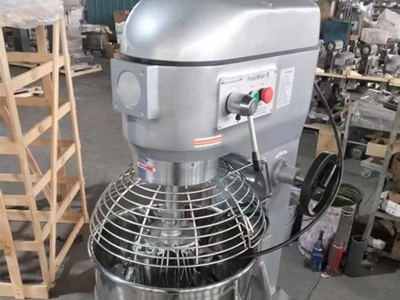
Industrial mixers use mechanical force to mix different materials evenly and are widely used in industries such as chemical, food, and pharmaceutical. Their core components include a motor, a mixing paddle, and a container. The motor provides power, and the mixing paddle, depending on its design, generates vortices or shear forces to achieve mixing, dissolving, or reaction of materials. The mixing effect depends on the paddle shape, rotational speed, and material characteristics.
Common Types and Characteristics
Paddle Mixer: Simple structure, suitable for mixing low-viscosity liquids.
Turbine Mixer: Strong shear force, commonly used for high-viscosity materials.
Planetary Mixer: High mixing uniformity, suitable for paste-like materials.
Magnetic Mixer: Non-contact transmission, suitable for corrosive liquids.
Application Scenarios and Selection Recommendations
Different industries have significantly different requirements for mixers. The chemical industry emphasizes corrosion resistance, the food industry requires easy-to-clean design, and the pharmaceutical industry needs to meet hygiene requirements. When selecting a mixer, consider the material viscosity, mixing accuracy, and production scale, while also paying attention to energy consumption and maintenance costs. Regularly inspecting seals and bearings can significantly extend the equipment's lifespan.