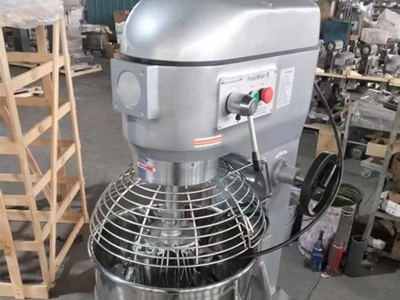
Planetary mixers, with their unique mixing structure, can adapt to the mixing needs of various materials with different properties, covering multiple industries.
In the building materials industry, they are suitable for viscous materials such as concrete, mortar, and putty. Their planetary mixing trajectory ensures thorough mixing within the container, preventing aggregate settling. They are particularly suitable for mixing specialty concretes (such as lightweight concrete and fiber-reinforced concrete), ensuring uniform proportions and improving material strength.
In the chemical industry, they can be used for fluid or paste-like materials such as coatings, adhesives, and resins. During mixing, they reduce bubble formation, and the close-proximity design of the blades to the container wall scrapes away residual material, ensuring uniform mixing and preventing localized solidification or uneven composition.
In the food industry, they are suitable for sauces, fillings, dough, and other materials such as chili sauce, mooncake fillings, and bread dough. Food-grade mixing components (such as stainless steel blades and the container body) ensure food safety, and the gentle mixing force prevents material breakage or over-kneading, preserving the original texture of the ingredients.
In the pharmaceutical industry, planetary mixers can be used to mix ointments, powders, and excipients. Precise stirring speed control and a sealed design prevent material contamination and component volatilization, ensuring that the mixing accuracy meets standards. Furthermore, in fields such as new energy (e.g., battery slurries) and daily chemicals (e.g., cosmetic creams), planetary mixers can also meet the mixing requirements for high uniformity and low loss.