Electrical Energy Converted to Heat
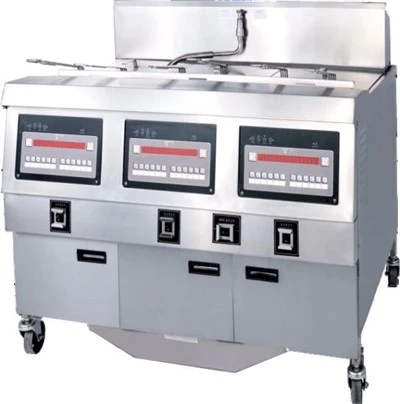
After the power is turned on, current flows through the heating element (heating tube or heating wire). Due to resistance, electrical energy is converted into heat energy, causing the heating element's temperature to rise rapidly.
The heating element transfers heat to the surrounding cooking oil through thermal conduction, causing the oil temperature to gradually rise.
Oil Temperature Control and Maintenance
When the oil temperature reaches the set temperature, the temperature control device automatically cuts off the heating power, stopping heating. When the oil temperature drops below the set temperature, the power is turned back on to resume heating, thus maintaining a stable oil temperature.
Some high-end models are equipped with PID temperature control technology (proportional-integral-derivative control), which allows for more precise adjustment of heating power and reduces temperature fluctuations.
Heating Food Through Heat Conduction and Convection
Hot oil directly heats the food surface through heat conduction, while the convection motion of the hot oil (the circulating flow of hot oil due to density differences) ensures that the heat is evenly distributed, guaranteeing that the interior of the food is also fully heated.
When food is placed in oil, the surface moisture evaporates quickly, forming a crispy outer shell. At the same time, the internal proteins, starches, and other components undergo denaturation and cooking reactions, achieving the desired cooking effect.